Good tournament organization begins long before the first kick-off
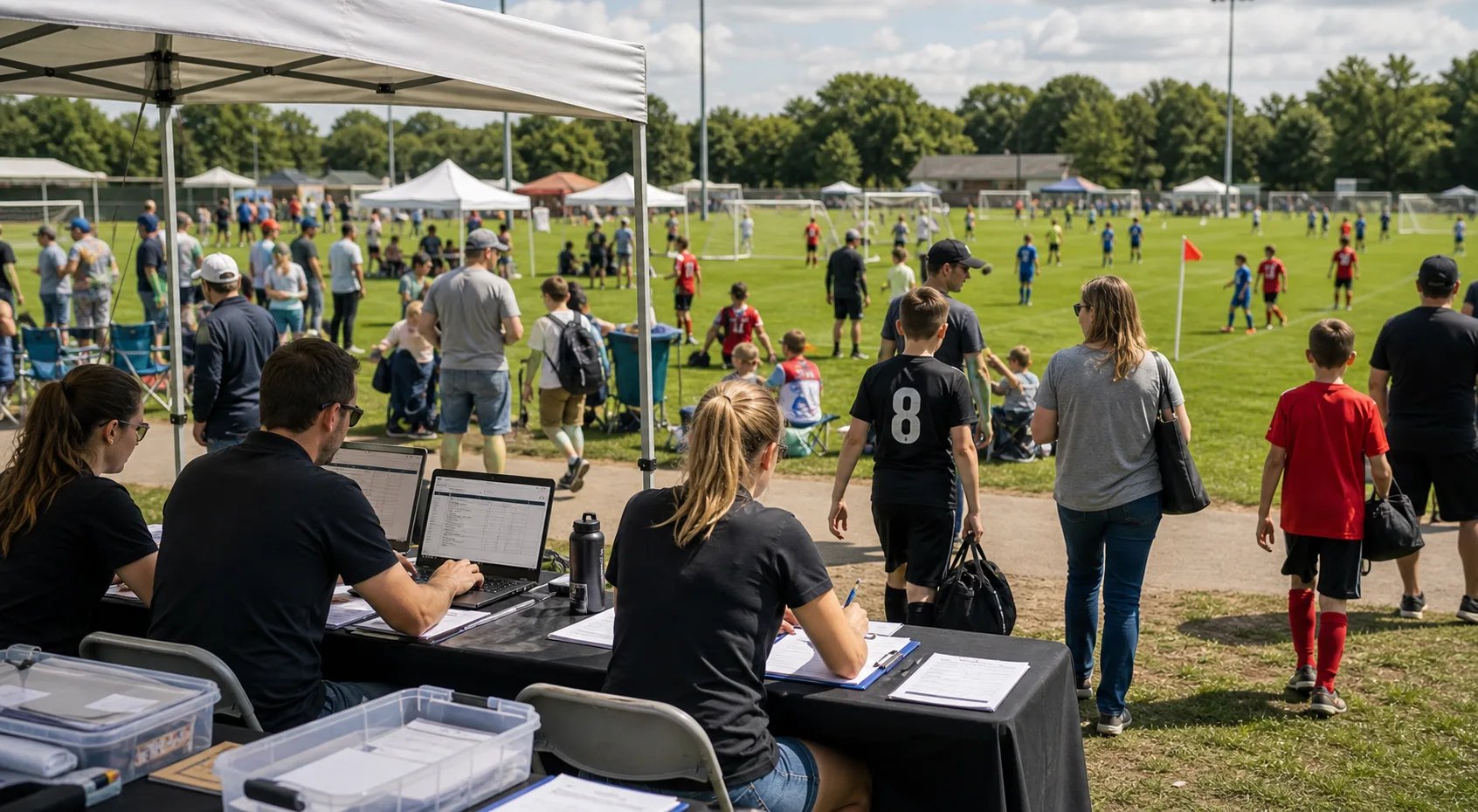
A football tournament often appears easy from the outside: teams arrive, games are underway, results are certain. Internally, however, the organization is demanding. Registrations, game plans, helpers, catering, communication with parents and teams as well as spontaneous changes on tournament day are intertwined. This is exactly why clubs benefit from clear digital processes, especially at tournaments.
1. Structure registration and information early
The earlier a club bundles registrations, contact persons and organizational information centrally, the fewer queries arise later. Even simple things like clear start times, parking information or game formats save a huge amount of chaos on tournament day.
2. Do not build game plans manually unnecessarily
Especially with several groups or playing fields, manual planning costs a lot of time and is prone to errors. Digital support helps to structure pairings, breaks and processes clearly and to communicate changes more quickly later.
3. Keep communication central for teams and parents
If information is distributed across too many channels, important information is quickly lost. It is better to have a central location for game plans, changes, results and organizational updates.
4. Make helper planning visible early
Tournaments often stand or fall with the coordination of people in the background. Who does check-in, catering, site supervision or results service? Clear responsibilities massively relieve pressure on tournament day.
5. Keep results and process visible
It is important for teams, parents and visitors to quickly understand what happens next. Current results, clear paths and a comprehensible process not only ensure fewer questions, but also a more professional impression.
Why digital support helps especially at tournaments
Tournaments bring together many small decisions in a short period of time. When registrations, game plans, helper information and results come together digitally, changes can be managed much more smoothly. This not only relieves the burden on the tournament management, but also improves the experience for everyone involved.
Conclusion
Organizing tournaments becomes much easier for clubs when planning, communication and processes are not scattered in individual lists and chats. Anyone who uses digital support sensibly reduces stress, appears more professional and creates a better experience for teams, parents, helpers and sponsors.
This is exactly the difference between a tournament that somehow works and a tournament that is remembered as well organized. For many clubs, this is not only important organizationally, but also for image, sponsorship and future registrations.